
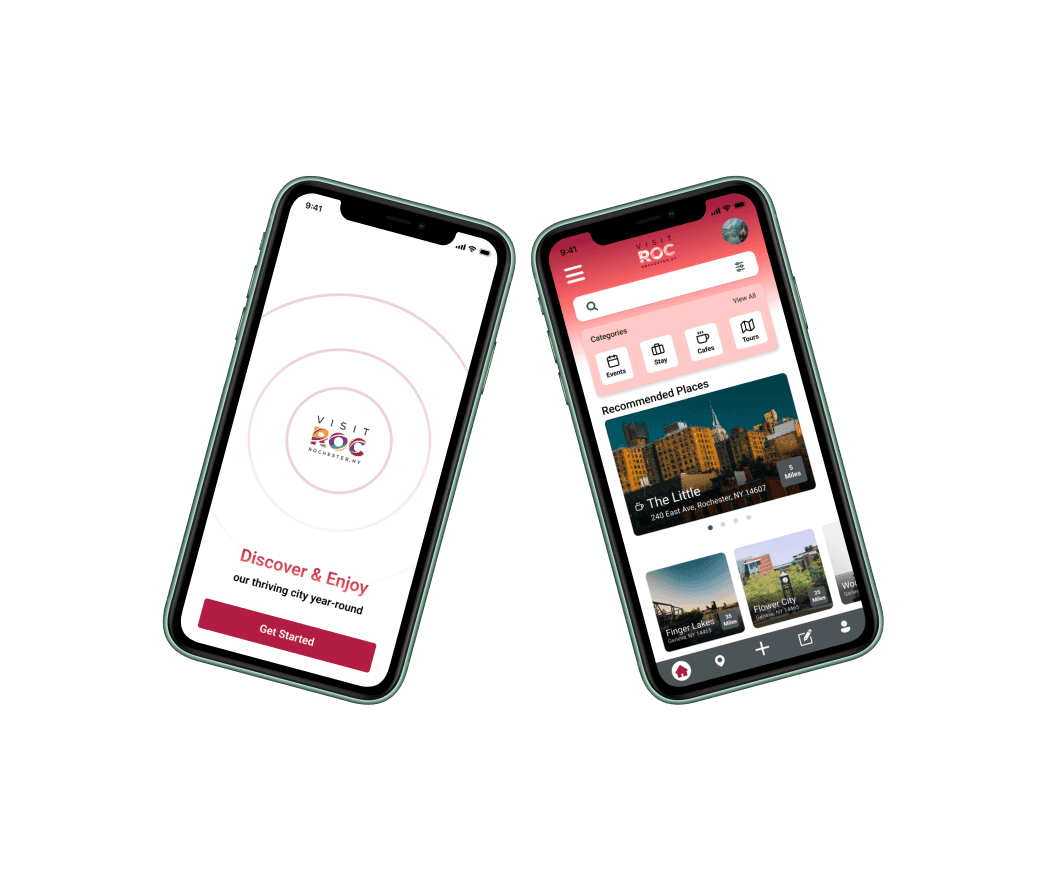
VisitROC App Redesign
Client
VisitROC
Project Duration
3 months
Tools Used

Team
Vedika Nimbalkar (UX Designer)
Aditya Anvekar (UX Designer)
Chaitanya Toraskar (UX Designer)
Dhaval Mahajan (UX Designer)
My Responsibilities
User Interviews
UI Evaluation
UI Redesign
Sketching
Prototyping
In the UX Club at RIT, our team collaborated to enhance the VisitROC app by incorporating gamification features. Through research, brainstorming, and UI redesign, we integrated elements like points and rewards to increase user engagement. Testing and refinement ensured the app was user-friendly. This project not only improved the VisitROC app but also provided insights into gamification's impact on user experience, showcasing our team's UX design skills within the college community.
About the Project
01.
The VisitROC app isn't being used much because its design is old-fashioned and it's hard to find your way around. This makes it tough for locals, tourists, and students to explore Rochester easily and leads to frustration. We need to make the app friendlier, more fun, and easier to use. This means giving it a fresh look, adding personalized features, and making it simpler to navigate. The goal is to make exploring Rochester enjoyable and hassle-free for everyone using the app.
Problem Statement
02.
Goal:
Revitalize the VisitROC app to enhance user experience and encourage exploration of Rochester.
Objectives:
Improve User Interface: Create a clearer and more engaging UI.
Increase Engagement: Add personalized features and gamification elements.
Enhance Navigation: Streamline app navigation for easier use.
Reflect Rochester's Spirit: Ensure the app reflects the city's vibrant character.
Provide Comprehensive Information: Offer up-to-date details on attractions and events.
Ensure Accessibility: Make the app user-friendly for residents, tourists, and students alike.
Goals and Objectives
03.
The VisitROC app is a digital guide for residents, tourists, and students exploring Rochester. It offers interactive maps, curated lists of attractions, event information, and special offers, making it easy to discover the city's cultural, culinary, and entertainment offerings.
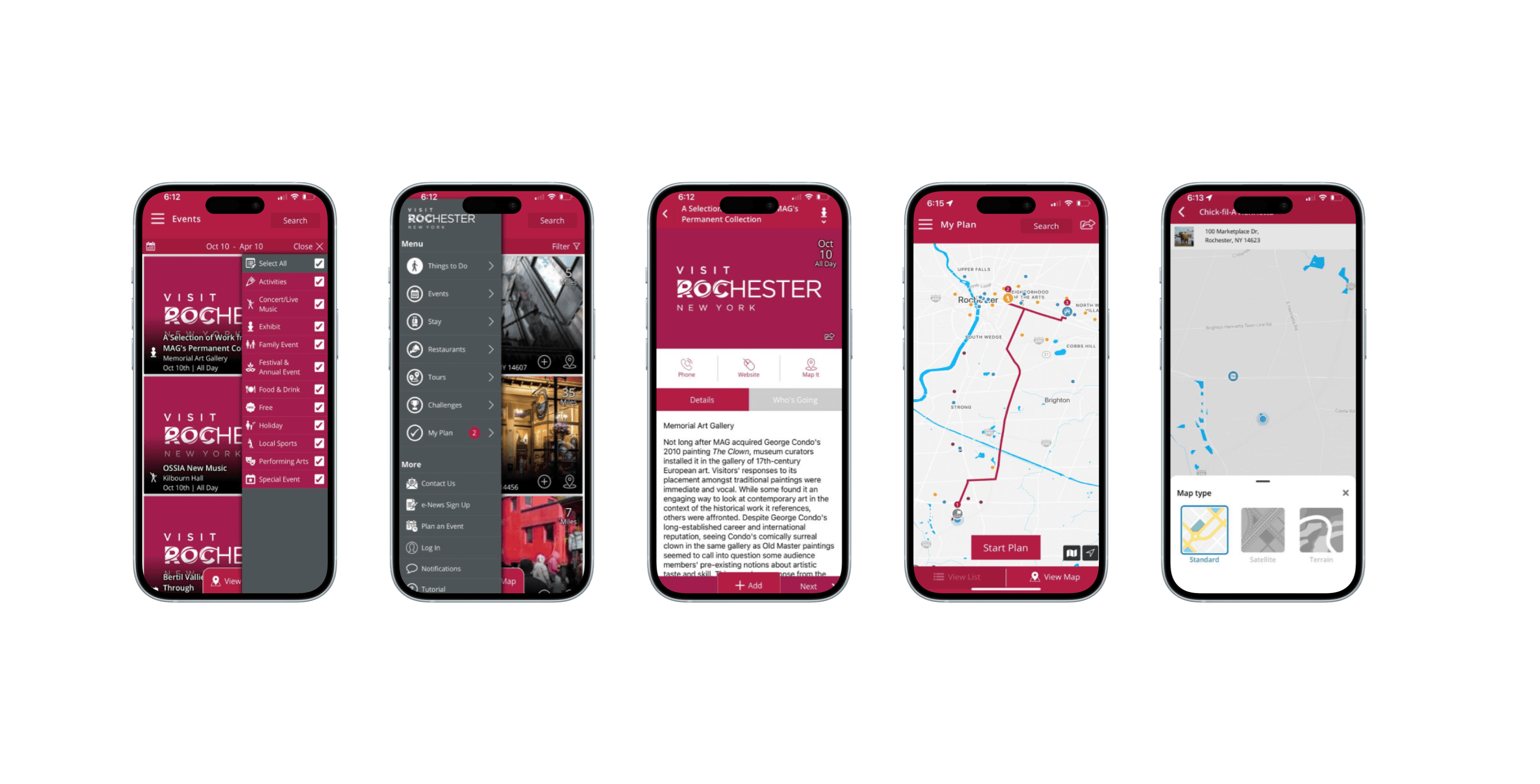
About VisitROC App
04.
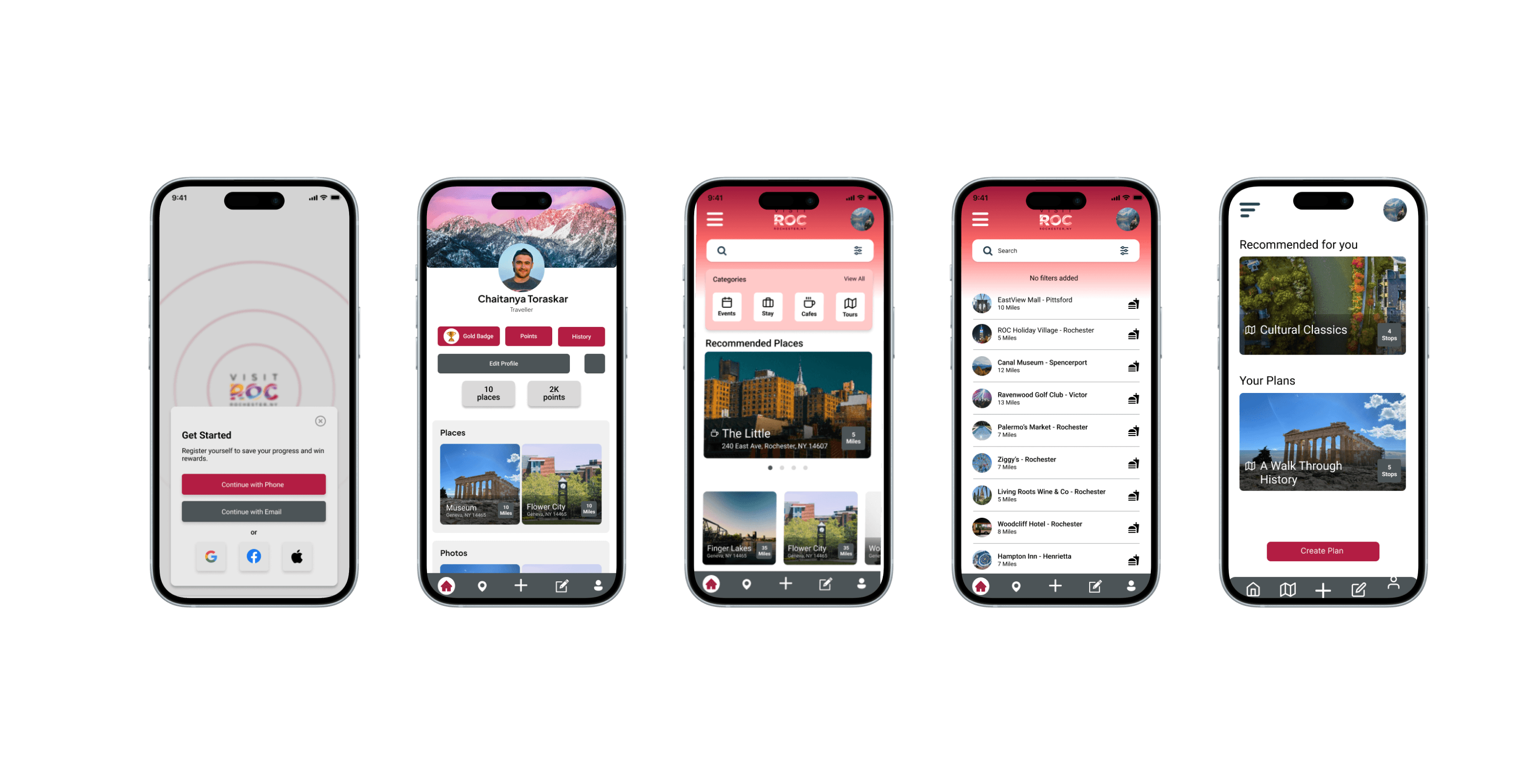
Motivated by these challenges, our team set out to overhaul the VisitRoc app. Our goal was to create an inviting, user-friendly, and efficient mobile experience that accurately reflects the vibrant spirit of Rochester.
We aimed to design an app that not only guides users through the city's scenic routes and attractions but also encourages exploration and discovery.
Our Solution
05.
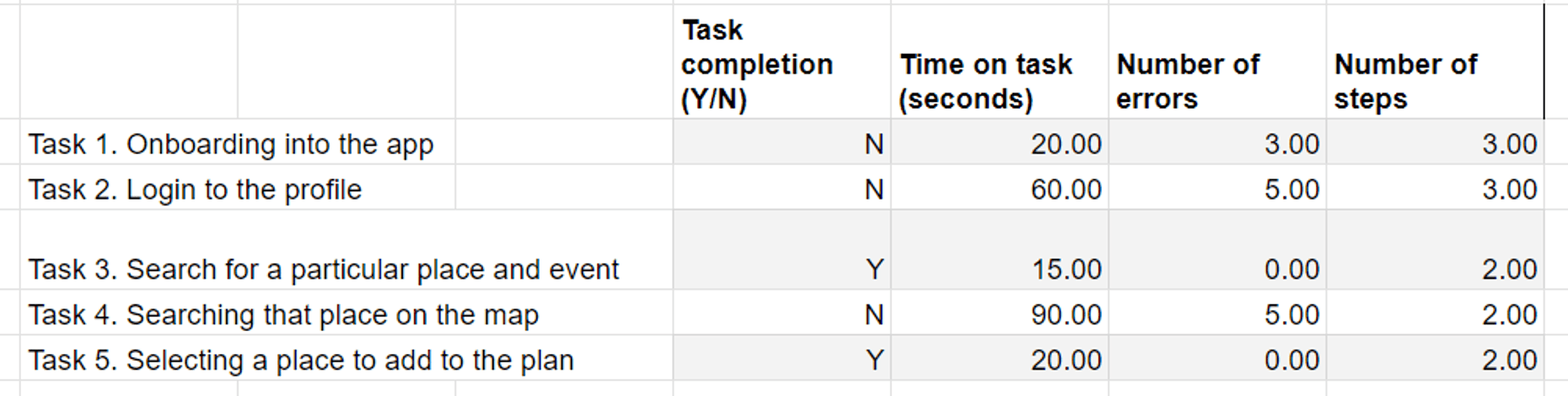
Our approach to understanding the needs of Rochester's residents, tourists, and students was straightforward yet comprehensive. Through interviews and task-based usability testing, we gained invaluable insights.
Methodology:
We interviewed a diverse group of participants to uncover their daily challenges and essential app features. Additionally, task-based testing allowed us to observe user interactions with VisitROC.
Tasks:
Onboarding: Assessing the app's ease of use during initial setup.
Selecting Destinations: Evaluating navigation and discoverability of attractions.
Mapping Routes: Testing the app's navigation capabilities.
Finding Details: Ensuring access to comprehensive event/location information.
Using Features: Exploring gamification elements for user engagement.
Findings:
Through this testing, we were able to observe firsthand how users navigated the app, encountered any difficulties or confusion, and their overall satisfaction with the user experience. This feedback helped us identify pain points and areas for improvement in the app's functionality and design.
These were our findings:
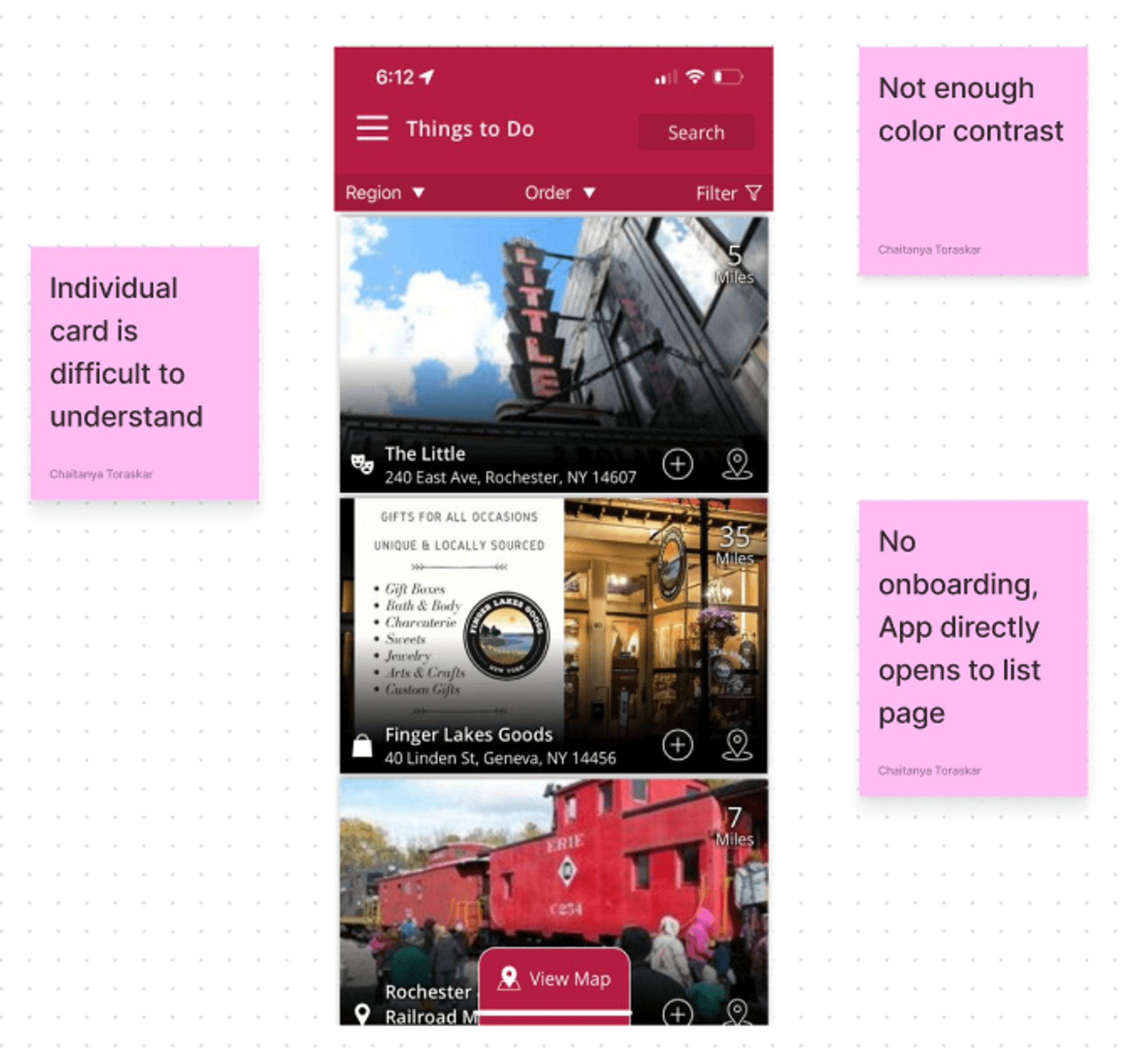
There is no profile page actually to keep a tab of places visited before
The app directly opens on various suggestions and there is no home page to know if I’m on the right page.
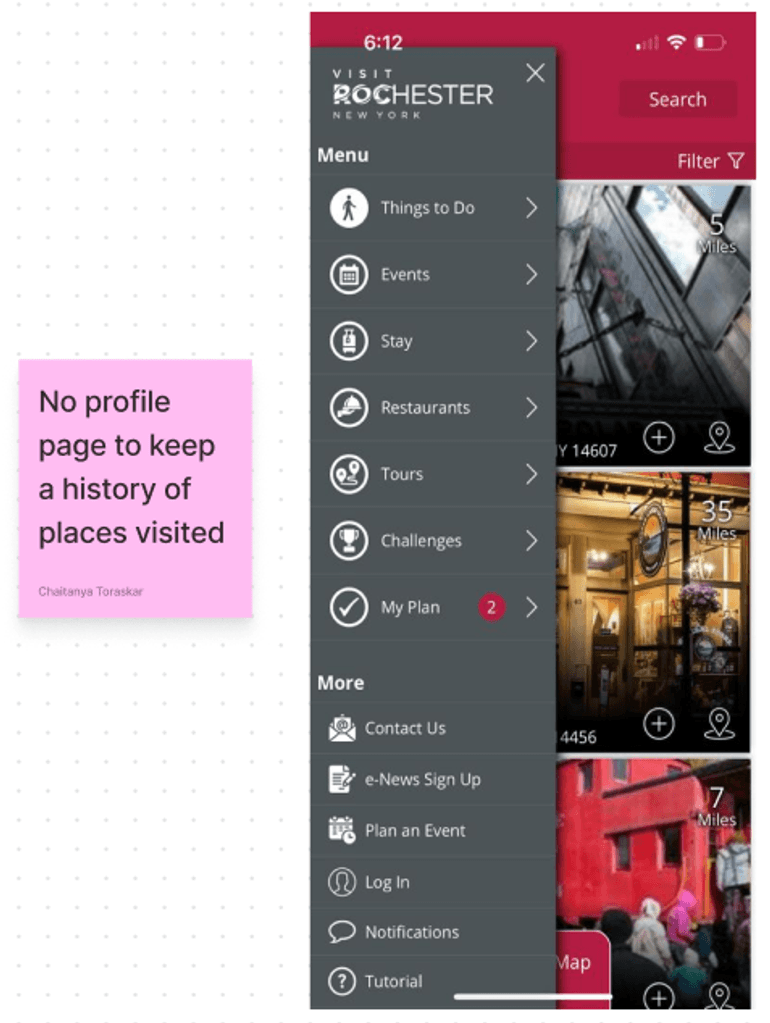
The challenges and my plan section of the app is quite difficult to understand
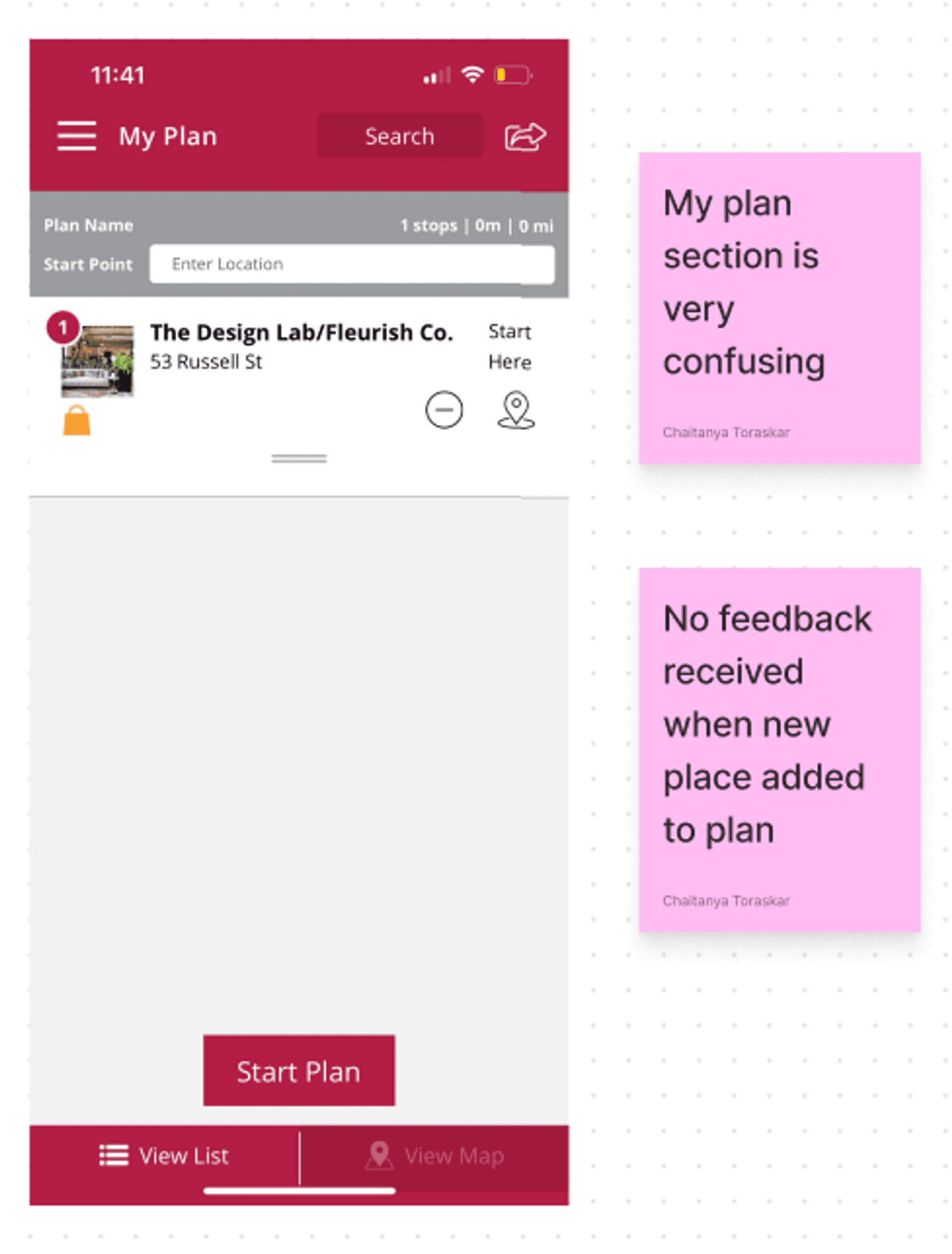
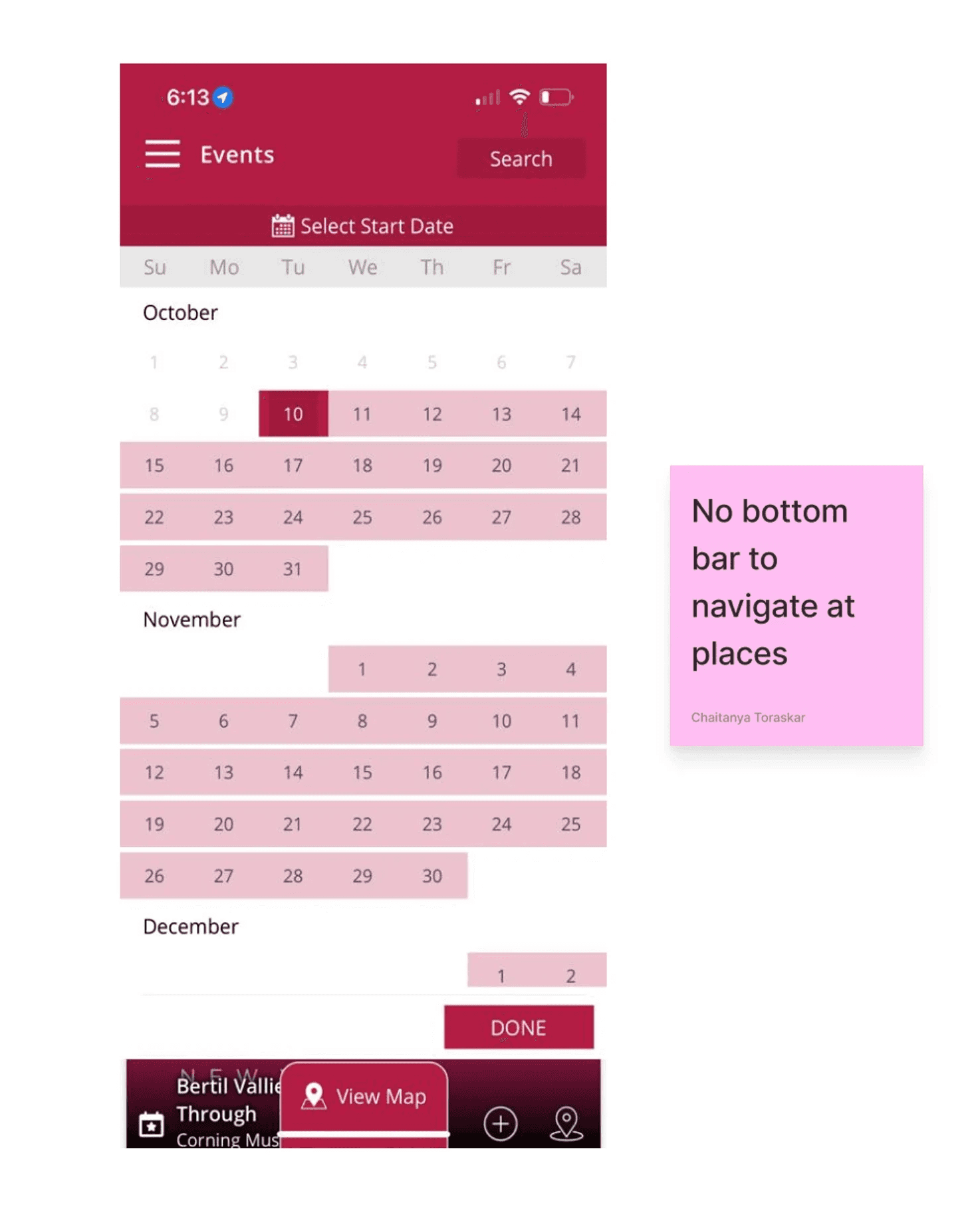
No bottom bar in the app which makes it difficult to navigate to different places
User Research and Analysis
06.
Using this information, we crafted a persona that captured the key traits, goals, motivations, and pain points of each user group. These persona served as fictional representation of real users, helping us empathize with their needs and make design decisions that align with their expectations.
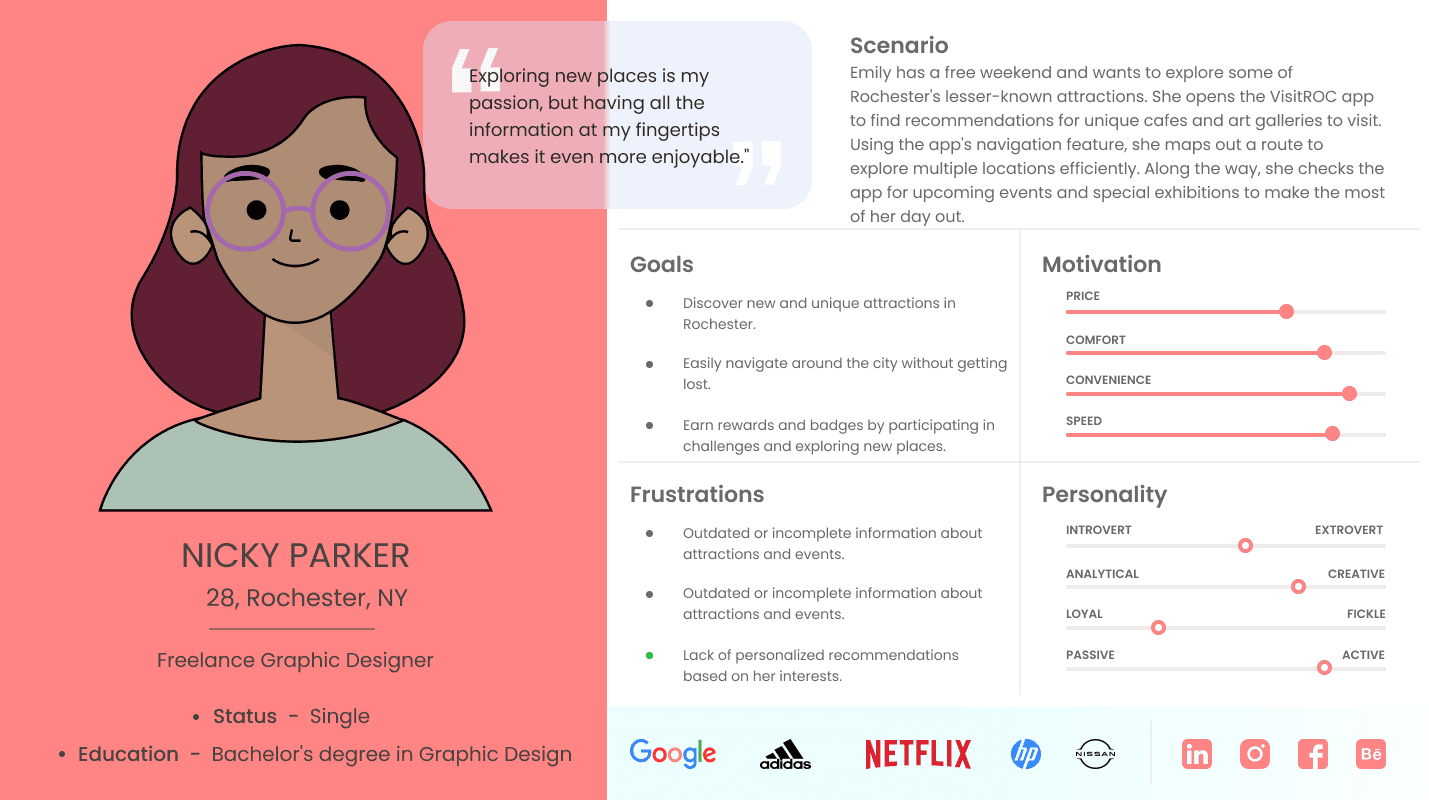
Persona
07.
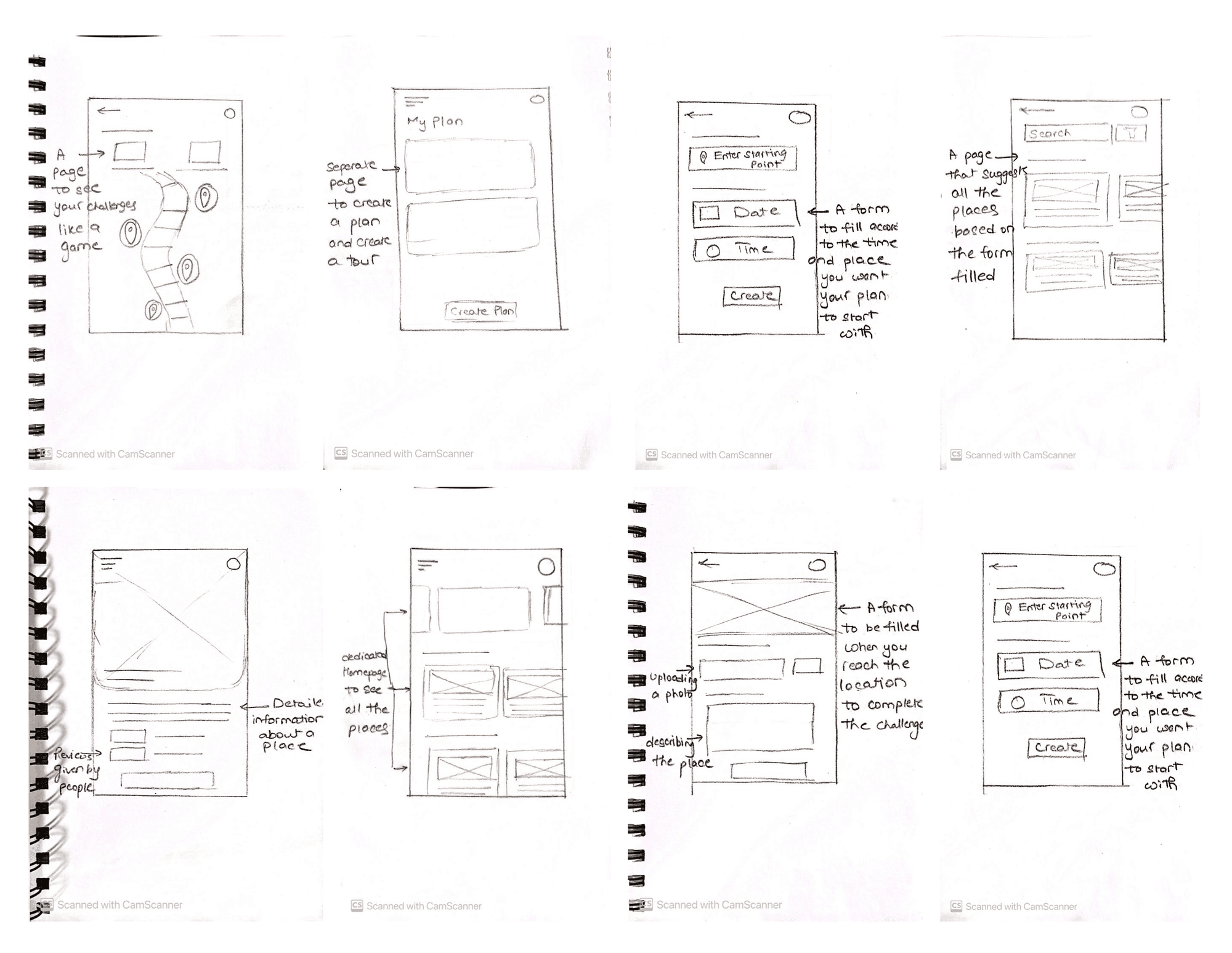
During the sketching process, we focused on enhancing the app's navigation system, improving the onboarding experience, and providing a clear and intuitive user interface. We also explored different ways to incorporate personalized features, such as a profile page to keep track of visited places, and a revamped challenges and my plan section that is easier to understand.
Sketching
08.
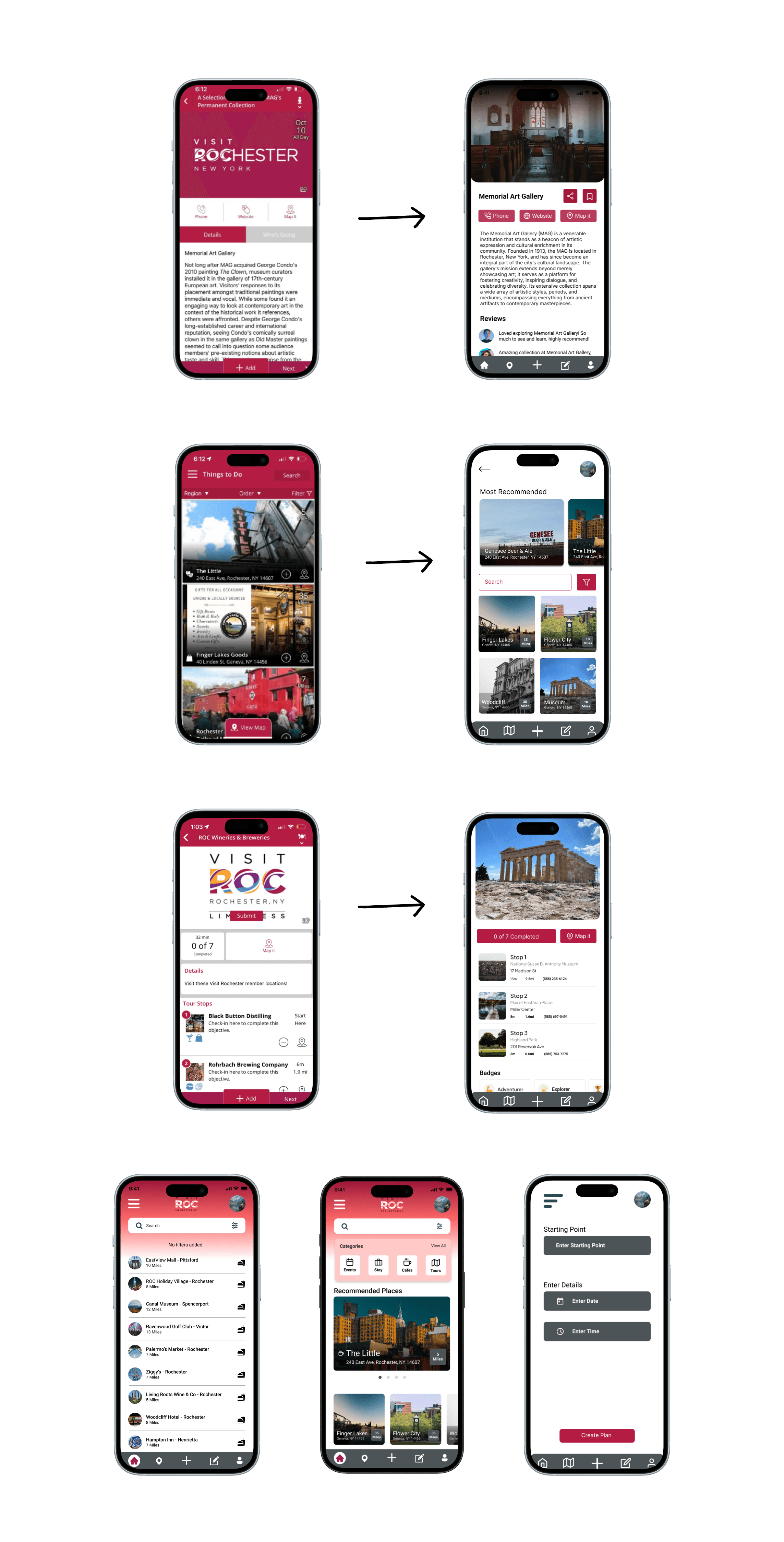
Hi-Fidelity Prototyping
09.
Next Steps
Achievement Badges: Users can earn badges for completing certain tasks or reaching specific milestones. These badges serve as a visual representation of their accomplishments and encourage them to explore more.
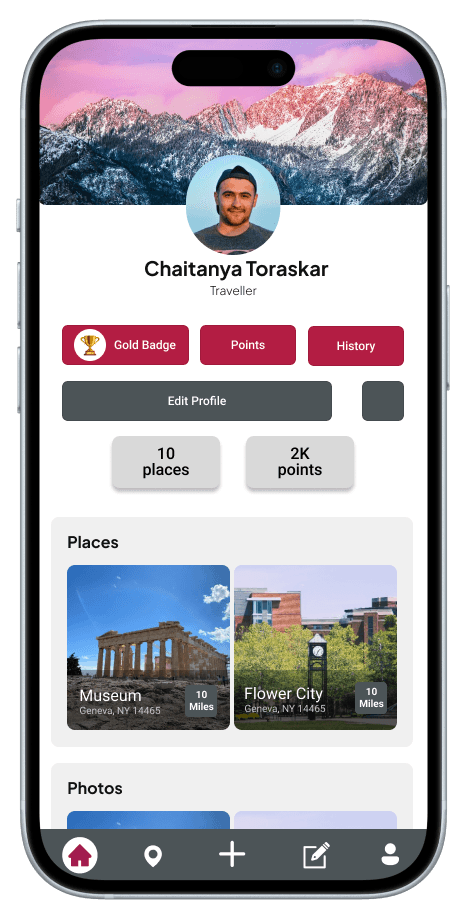
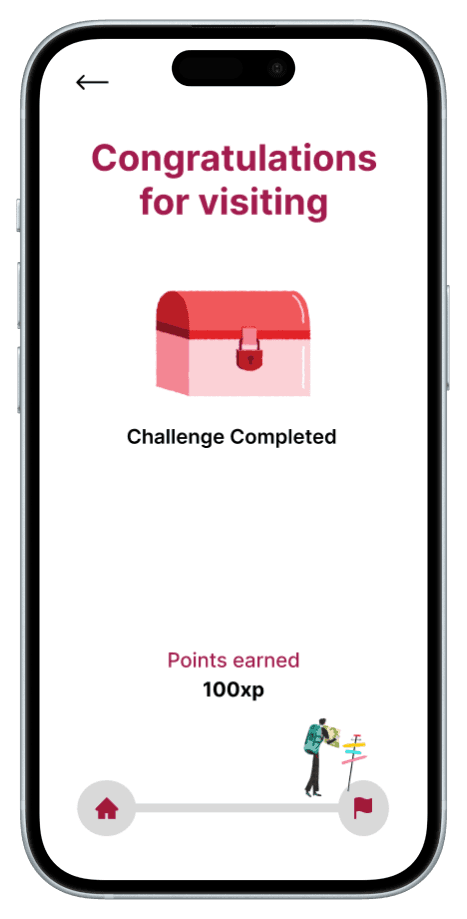
Points and Levels: Users earn points for using the app and completing various activities, such as visiting different locations, participating in challenges, and providing feedback. As users accumulate points, they level up, unlocking new features and rewards.
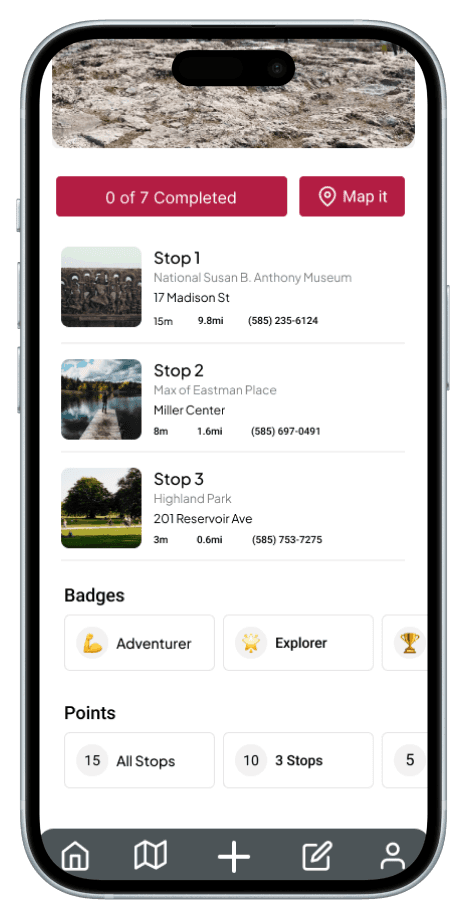
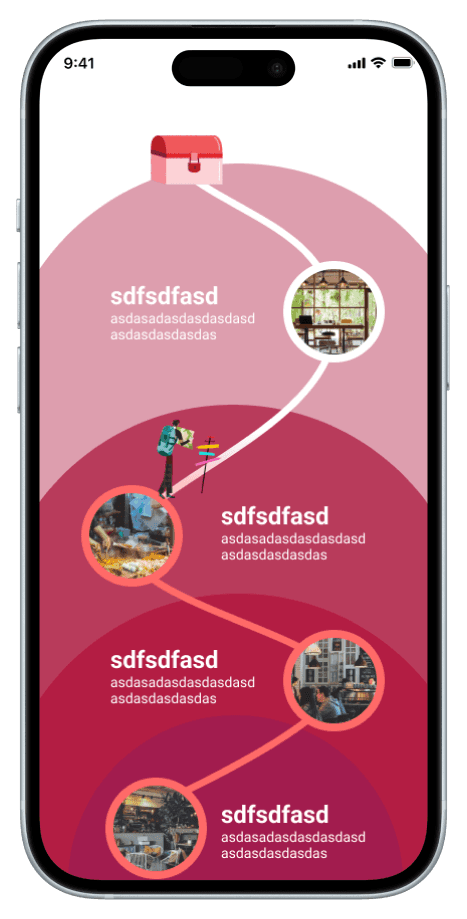
Rewards and Prizes: As users progress and achieve milestones, they can unlock exclusive rewards and prizes. These incentives further encourage users to explore Rochester, complete challenges, and interact with the app.
10.
Gamification System
To make the VisitROC app more engaging and intuitive, we introduced a gamification system. This system rewards users for their interactions and achievements within the app, enhancing the overall user experience. Here's how it works:
Takeaways
12.
I learned how to effectively tailor a product to enhance user satisfaction and engagement.
This experience underscored the value of collaborative teamwork in design.
Incorporating user feedback into each iteration was instrumental in refining and improving the app.
strike a balance between meeting user needs and achieving the business objectives, ensuring the design aligns with the overall strategy.