EcoWay
A gamified app that helps people choose eco-friendly travel options.
My Responsibilities
User Interviews
Design System
Sketching
Prototyping
Project Duration
24 hours
Team
Vedika (UX Designer)
Aditya (UX Designer)
Chaitanya (UX Designer)
Anshul (UX Designer)
Tools Used

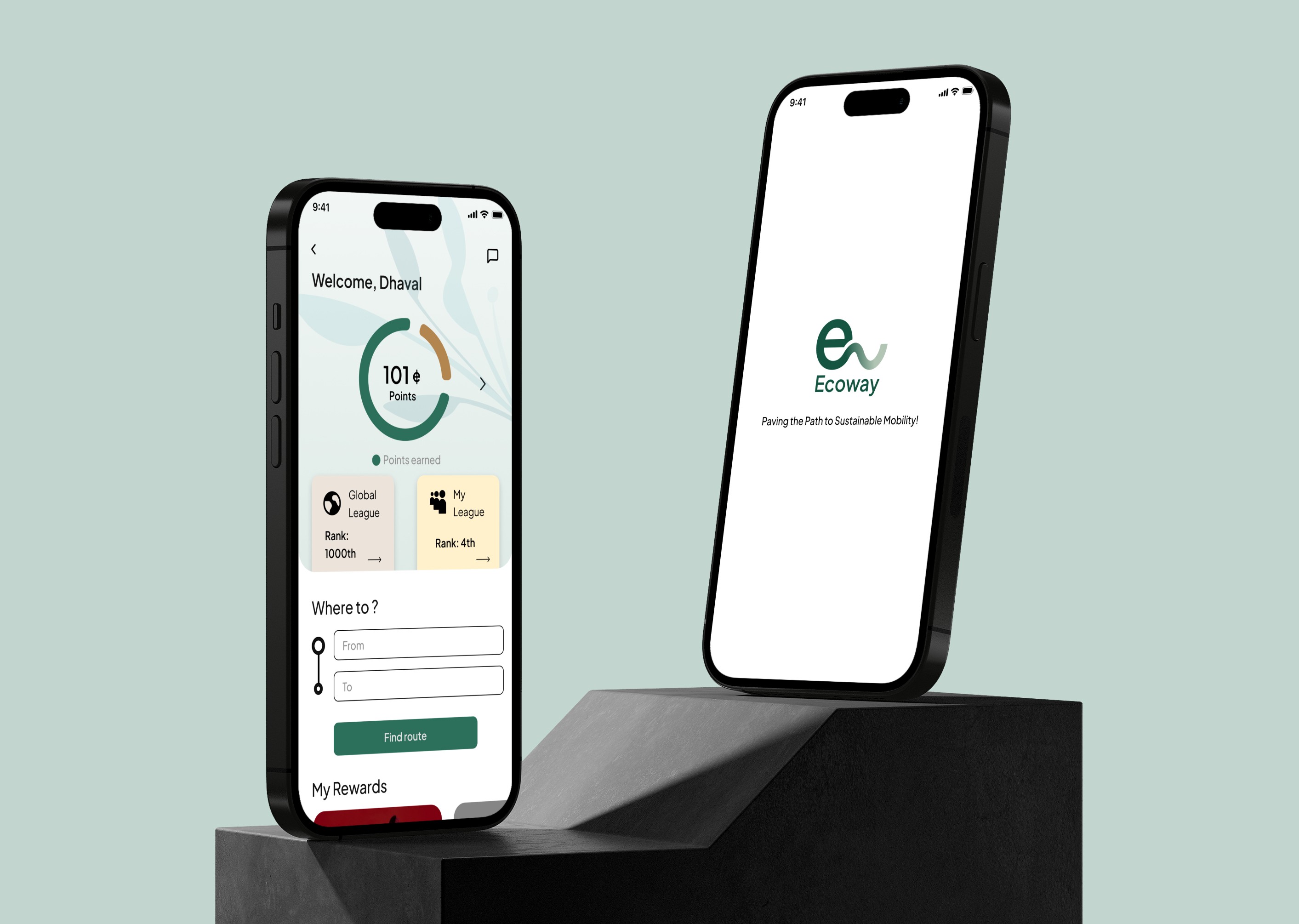
What is EcoWay?
EcoWay is a sustainability app designed for a hackathon in 24 hours to help users:
✅ Track their carbon footprint
✅ Find greener travel options (biking, carpooling, public transport)
✅ Stay motivated with challenges & rewards
🚀 Spoiler Alert: WE WON! 🏆
The Problem
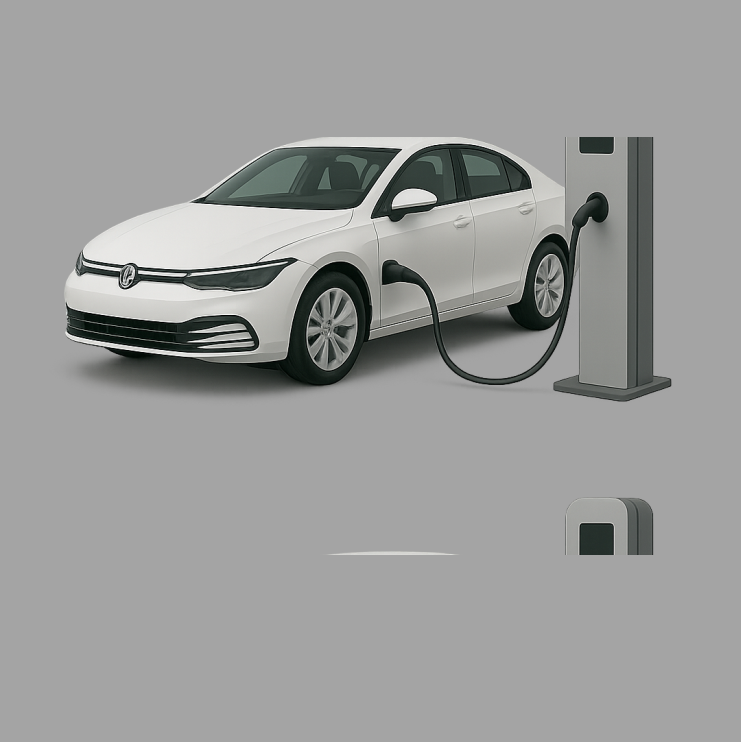
🚗 Transportation is a top cause of pollution, but most people find eco-friendly travel hard or inconvenient.
🌍 People care about sustainability, but they need easy tools to help them choose greener options.

Solution
We created a simple, fun, and rewarding way to make better travel choices.
Live Carbon Tracking → See your footprint instantly
Smart Suggestions → Get greener routes (bike, carpool, bus)
Gamification → Earn rewards, join challenges, and compete with friends
💡 Turning daily commutes into a fun habit!


Design Process
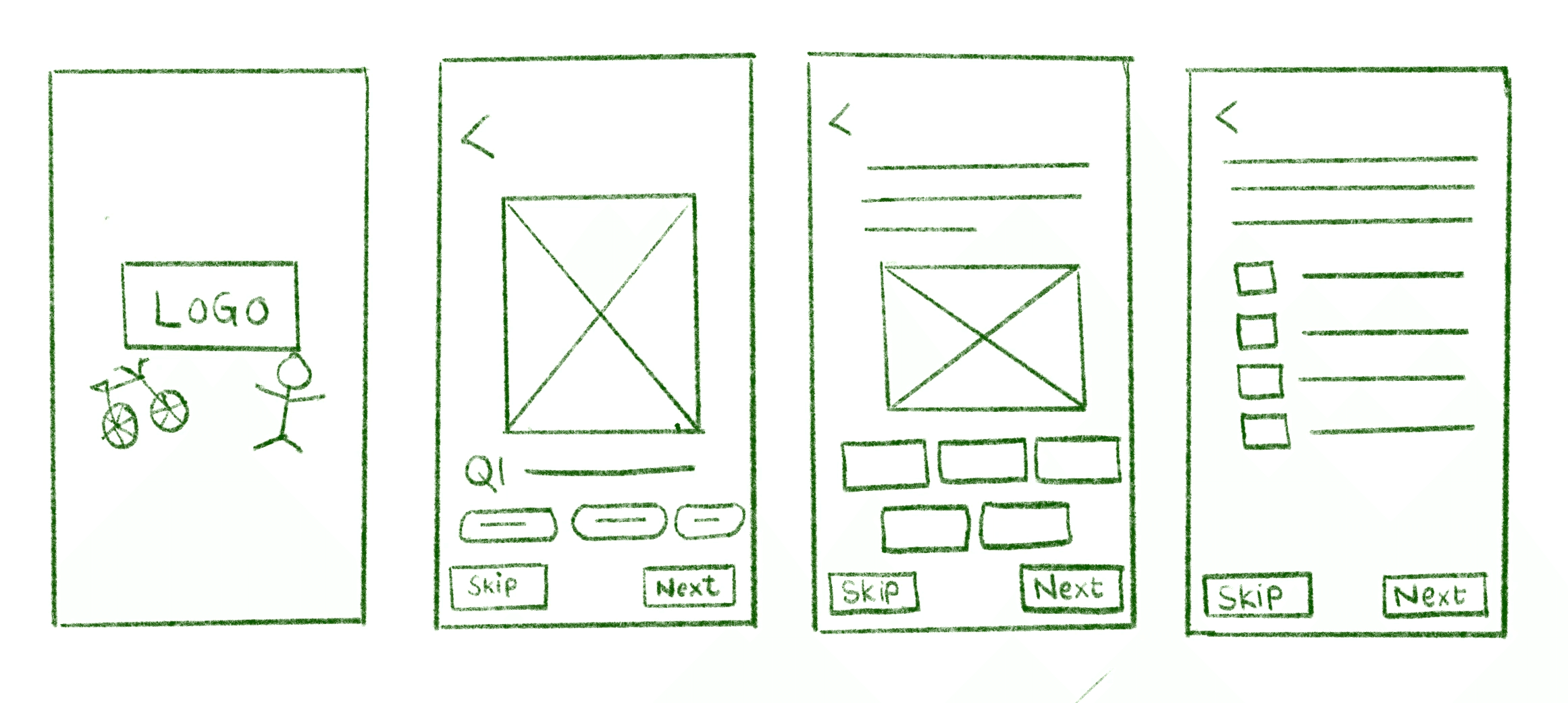
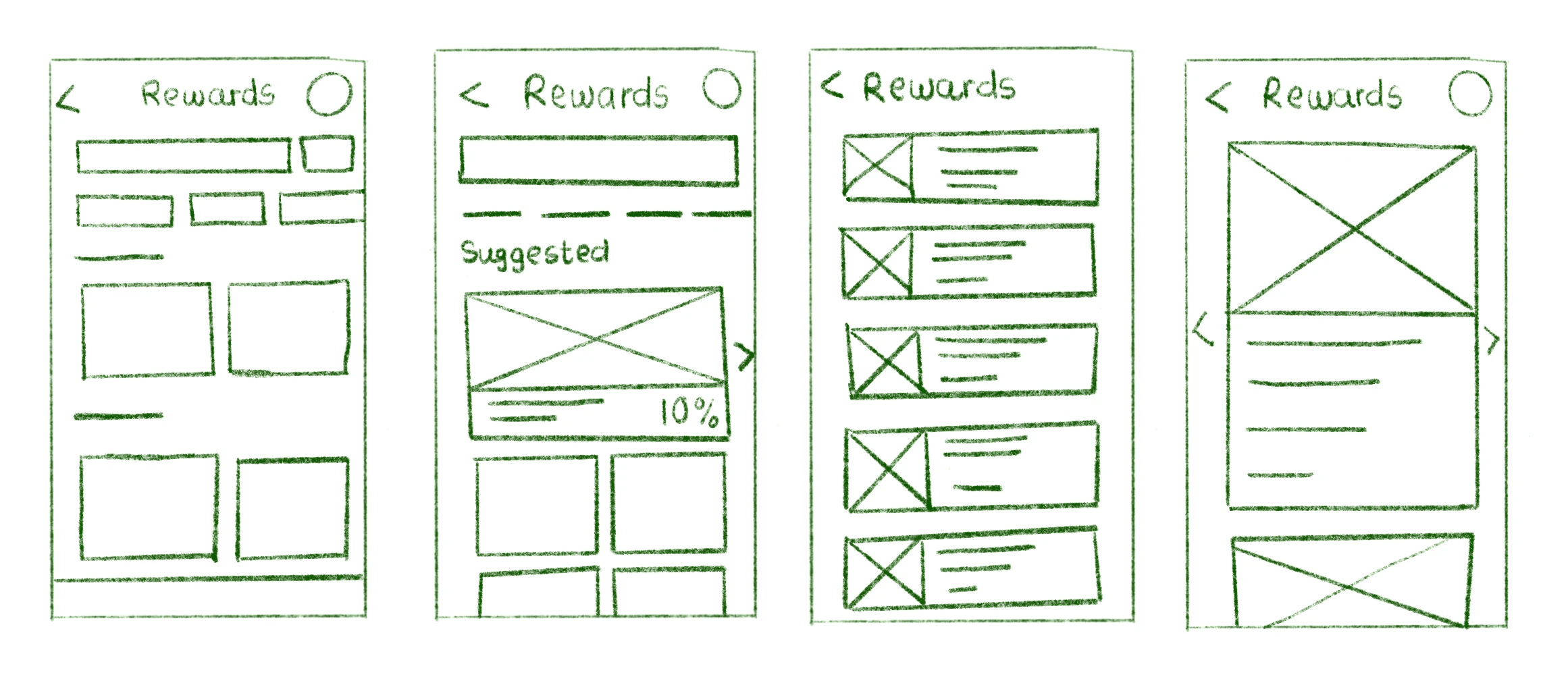
Due to the limited time (24 hours), we had to move fast. Instead of creating low-fidelity digital wireframes, we sketched ideas on paper and then jumped straight to high-fidelity wireframes and prototypes. This allowed us to quickly refine the UI while ensuring a polished final design.

Empathize
User Research
Interviews
Problem Discovery
Define
Affinity Mapping
User Personas
Problem Statement

Ideate
Brainstorming
Crazy 8s
Feature Prioritization

Design
Lo-fi Wireframing
UI Design
Prototyping

Test
No time, no tests, just vibes. 🙆♀️


User Interview
Finding people for interviews during the hackathon was a challenge—everyone was busy working on their own projects. To overcome this, we went straight to our sponsors, who were more than happy to share their thoughts. We managed to interview 2 sponsors and 2 fellow participants to gain a mix of perspectives on sustainable commuting.
To guide our conversations, we prepared a set of focused questions aimed at understanding daily commuting habits, awareness of environmental impact, and motivations for adopting eco-friendly travel options.
What We Learned
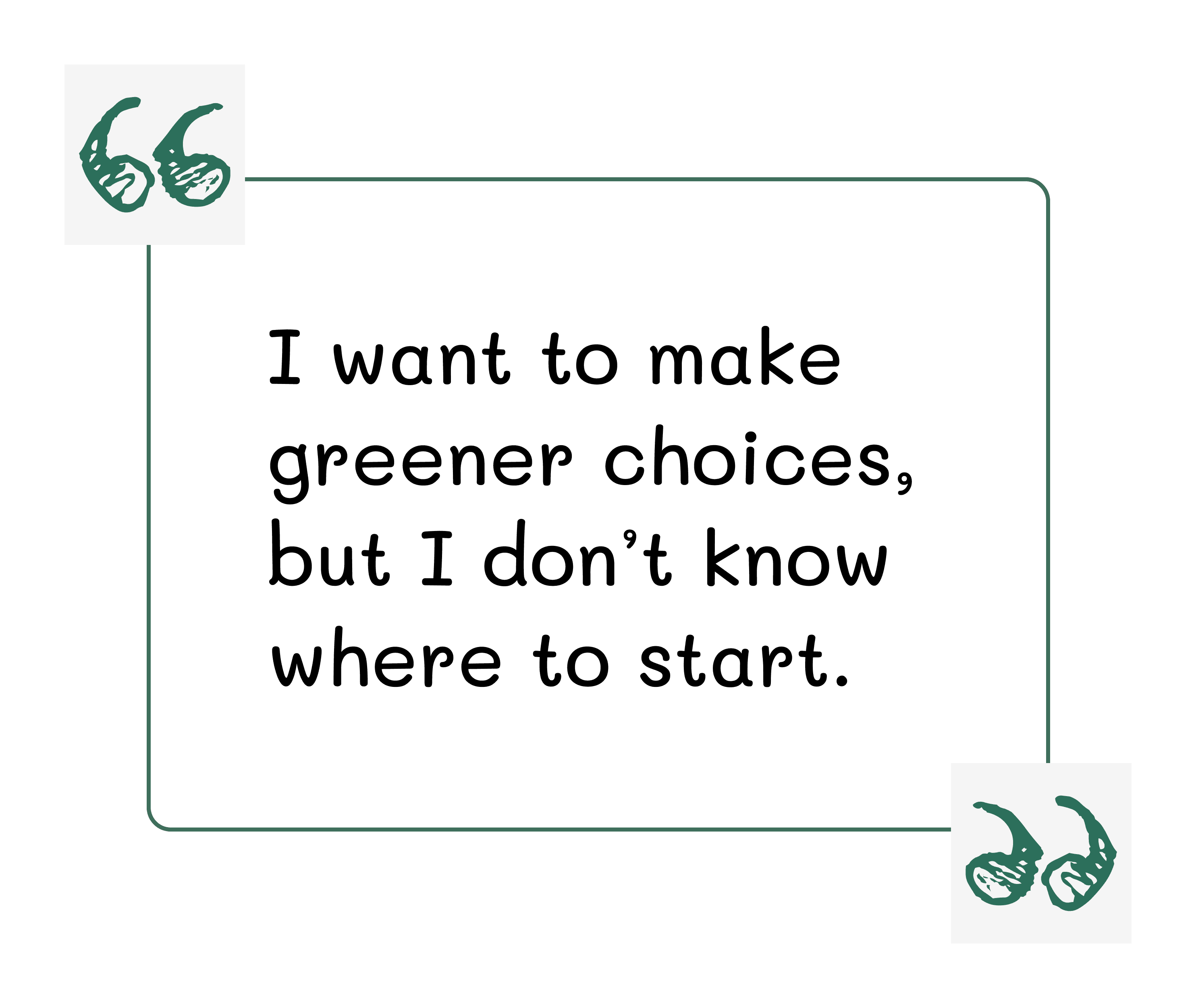
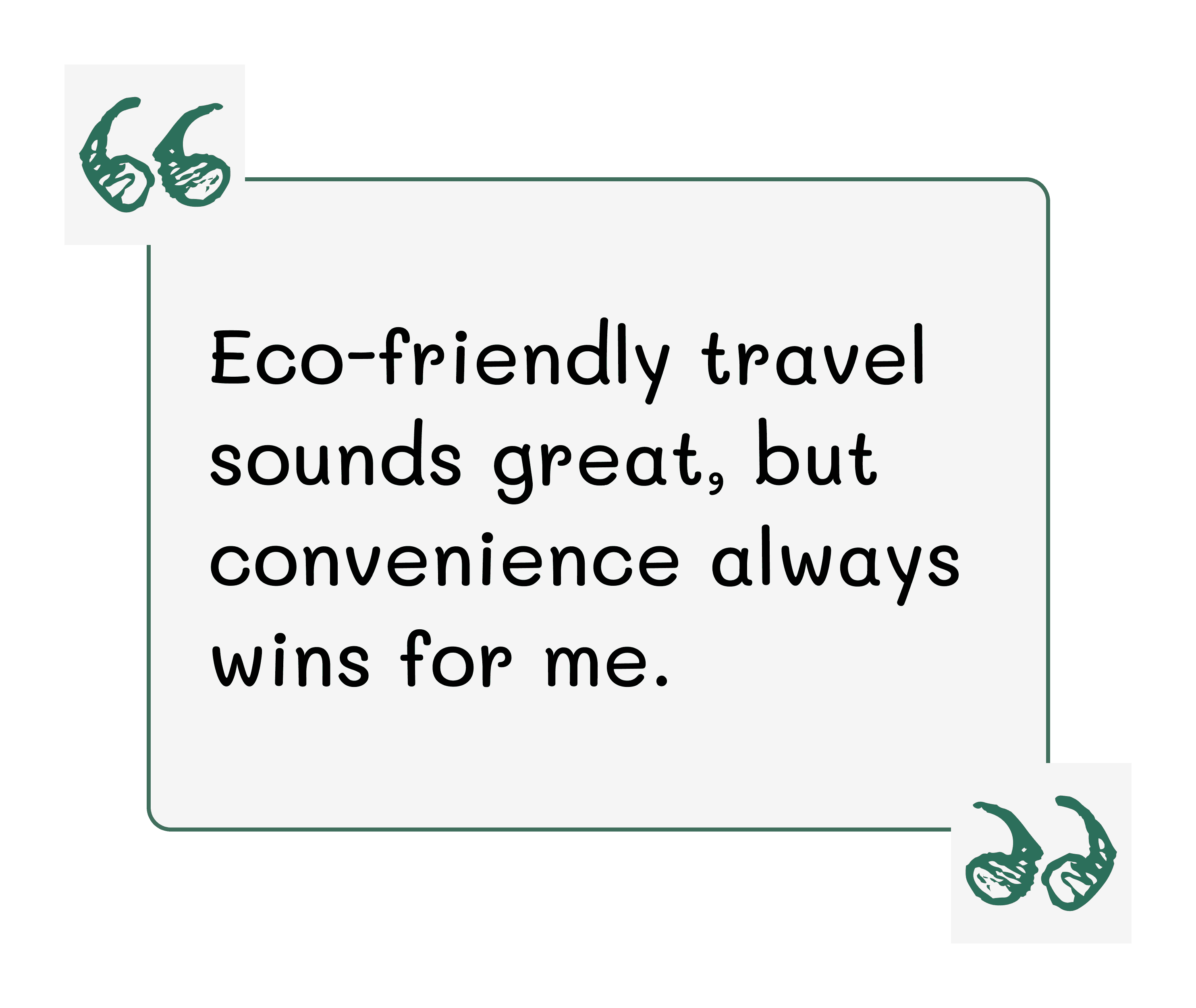
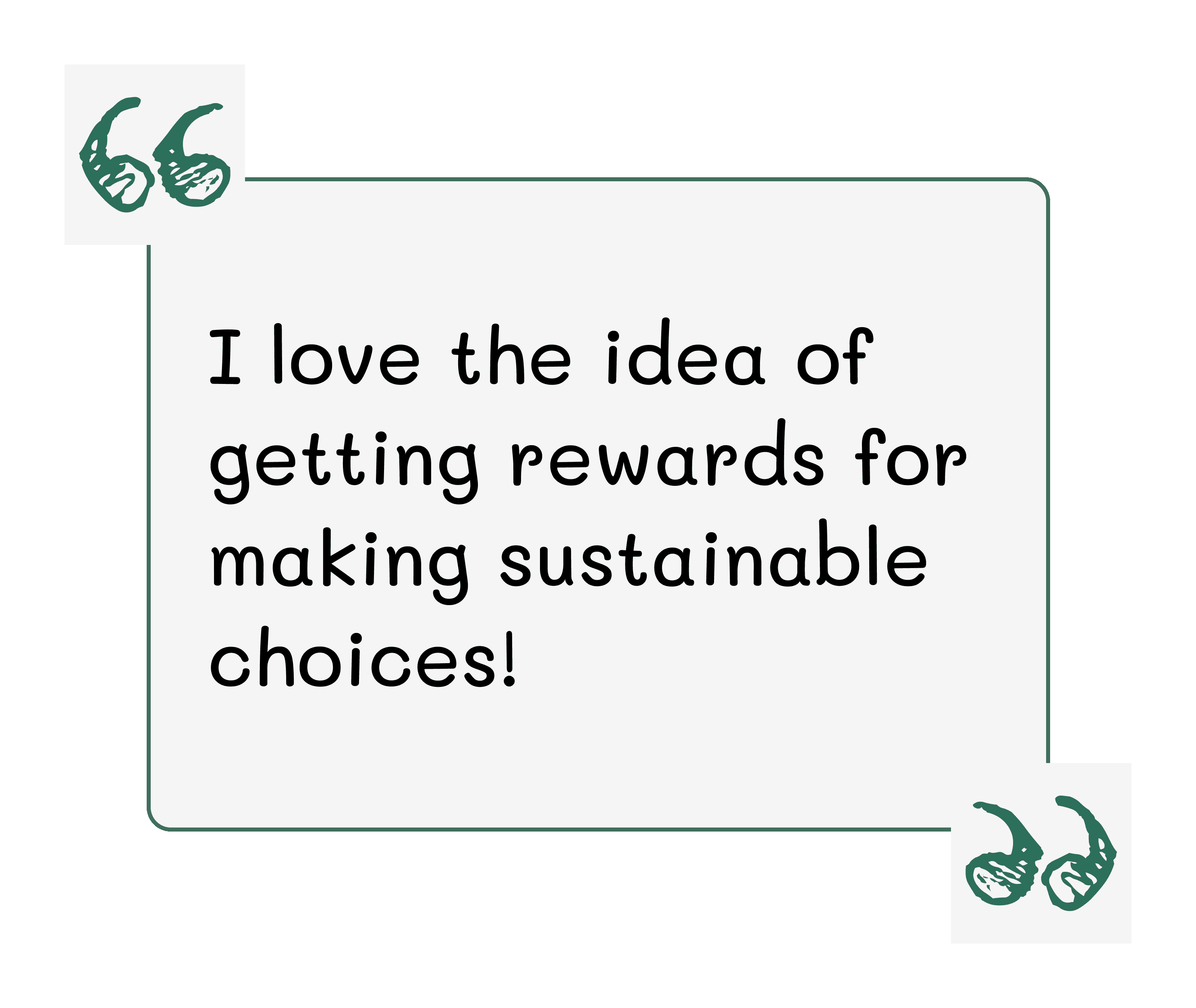
Here’s what our interviewees had to say:
Affinity Mapping
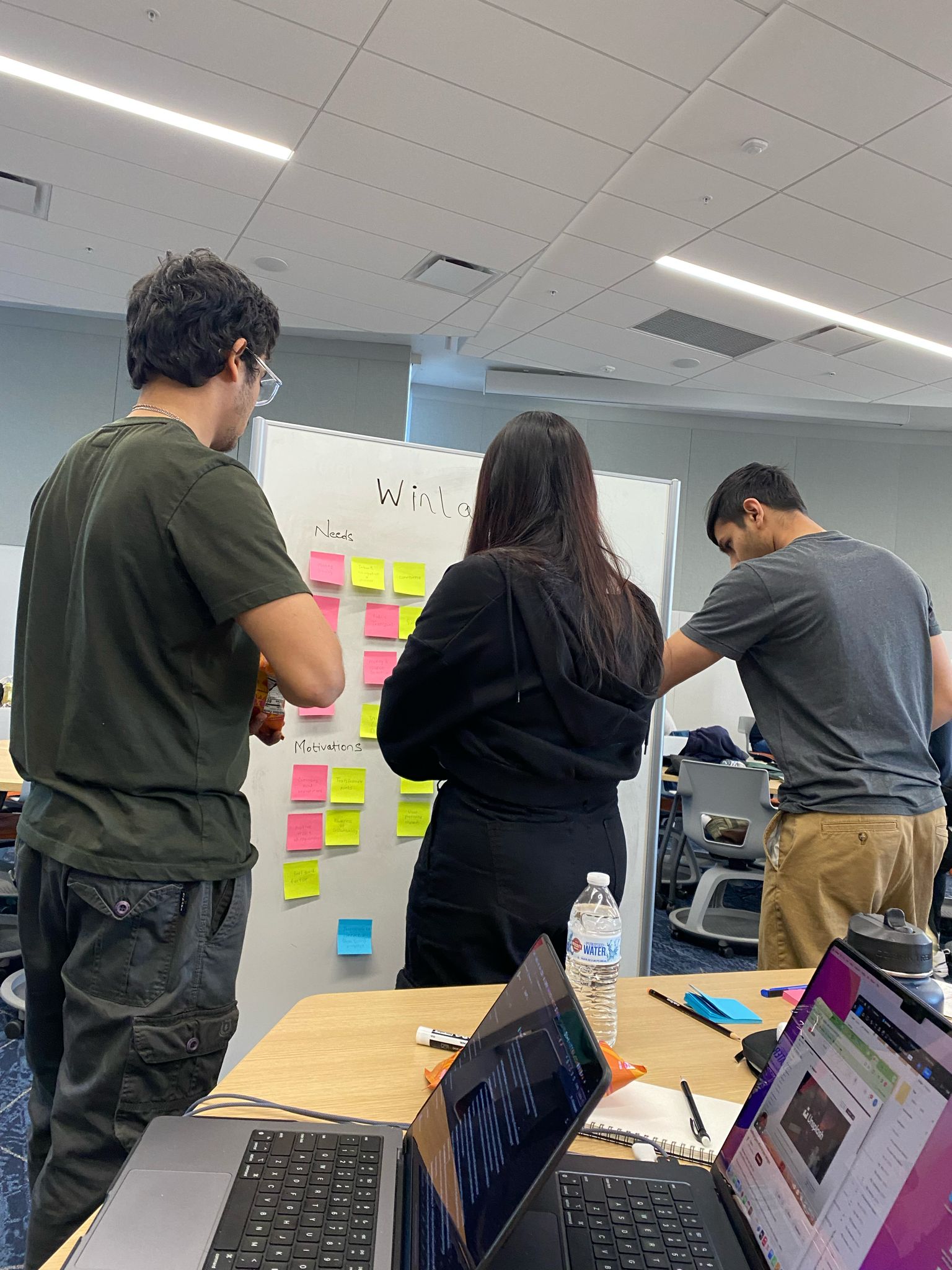
With only 24 hours to work with, we knew we had to move fast. Our approach? Talk to the people right in front of us. We interviewed four participants at the hackathon to get their take on sustainable travel.
What did we learn?
People know climate change is real, but they’re not sure how their commuting habits fit into the bigger picture.
They want to make greener choices, but convenience often wins out over sustainability.
Motivation matters—give them a reason to care, and they just might.
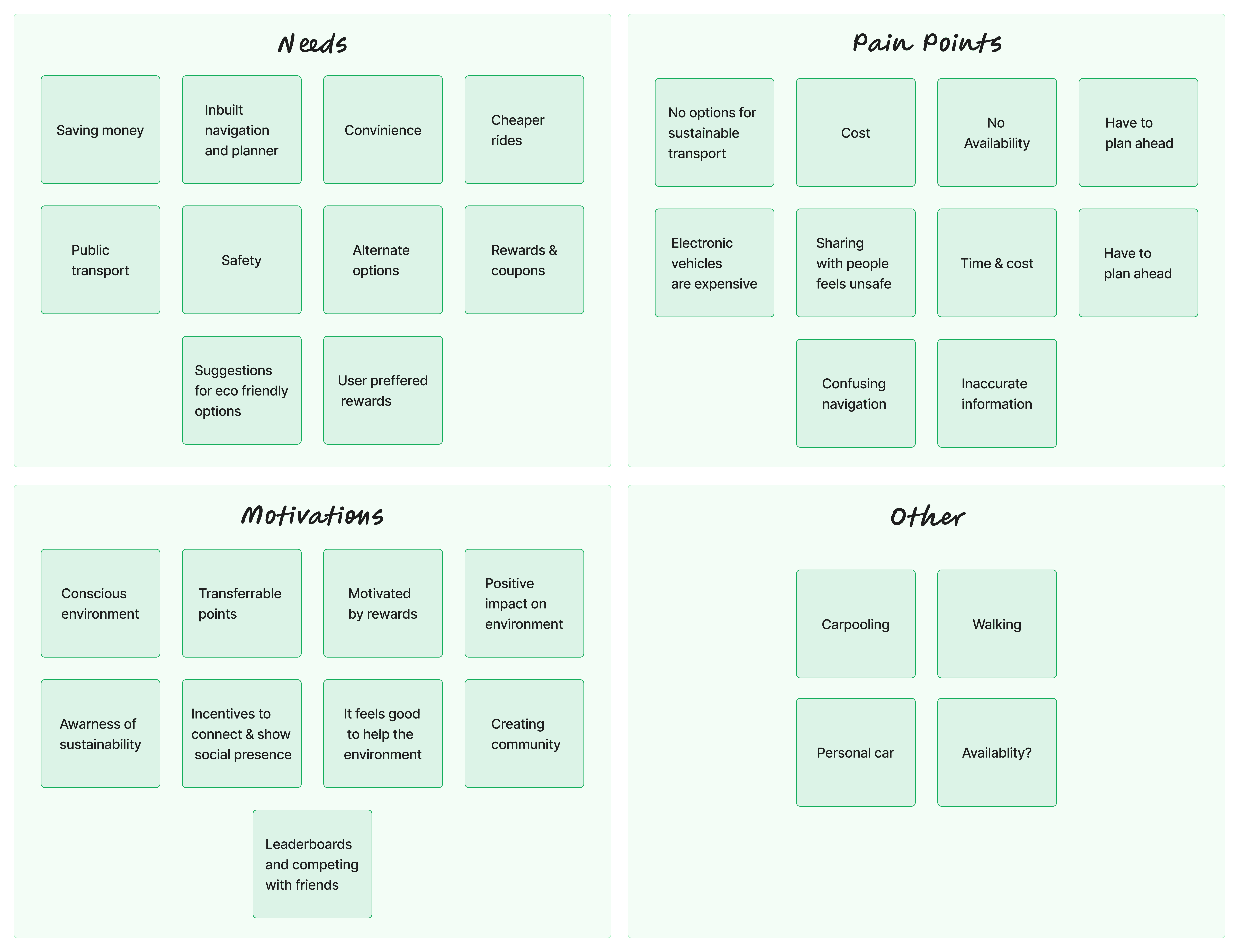
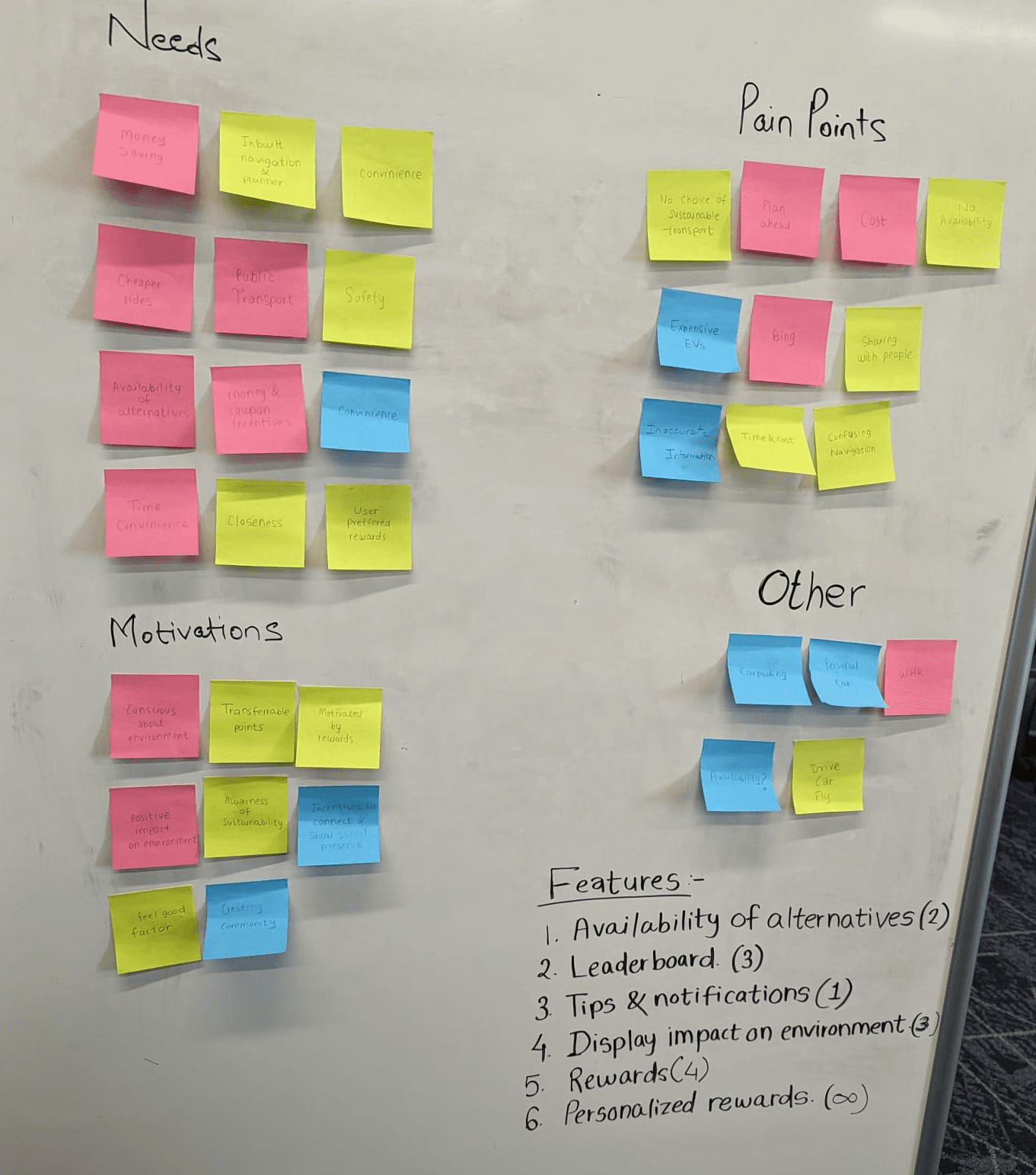
We organized our findings into an affinity diagram (yes, post-its everywhere) and grouped them into four categories: Needs, Pain Points, Motivation and Other. These would guide every design decision we made from here on.

Brainstorming
Armed with insights, we huddled together for a good ol’ brainstorming session. Out came the Crazy 8s, a rapid sketching exercise where each of us whipped up 8 layout ideas in 8 minutes. No idea was too wild.
By the end of our sketching spree, the concept for EcoWay started to take shape. We knew we wanted to:
Show users the environmental impact of their commute.
Offer greener alternatives, like cycling or carpooling.
Make it fun with leaderboards, challenges, and rewards.
Design System
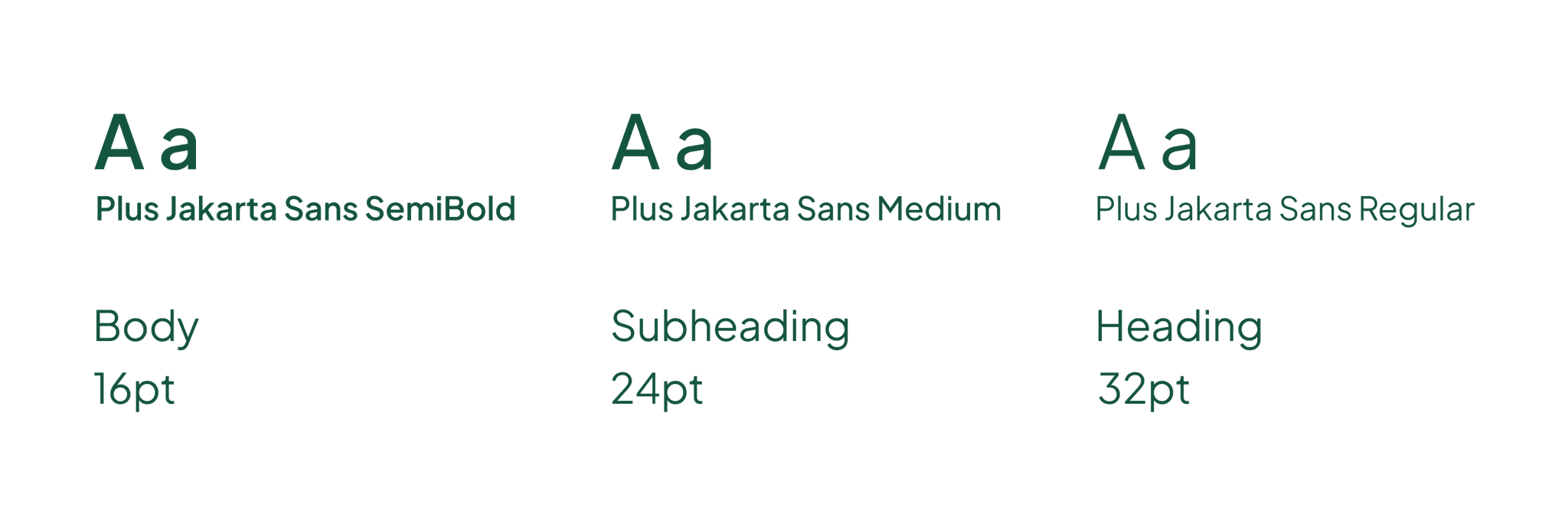
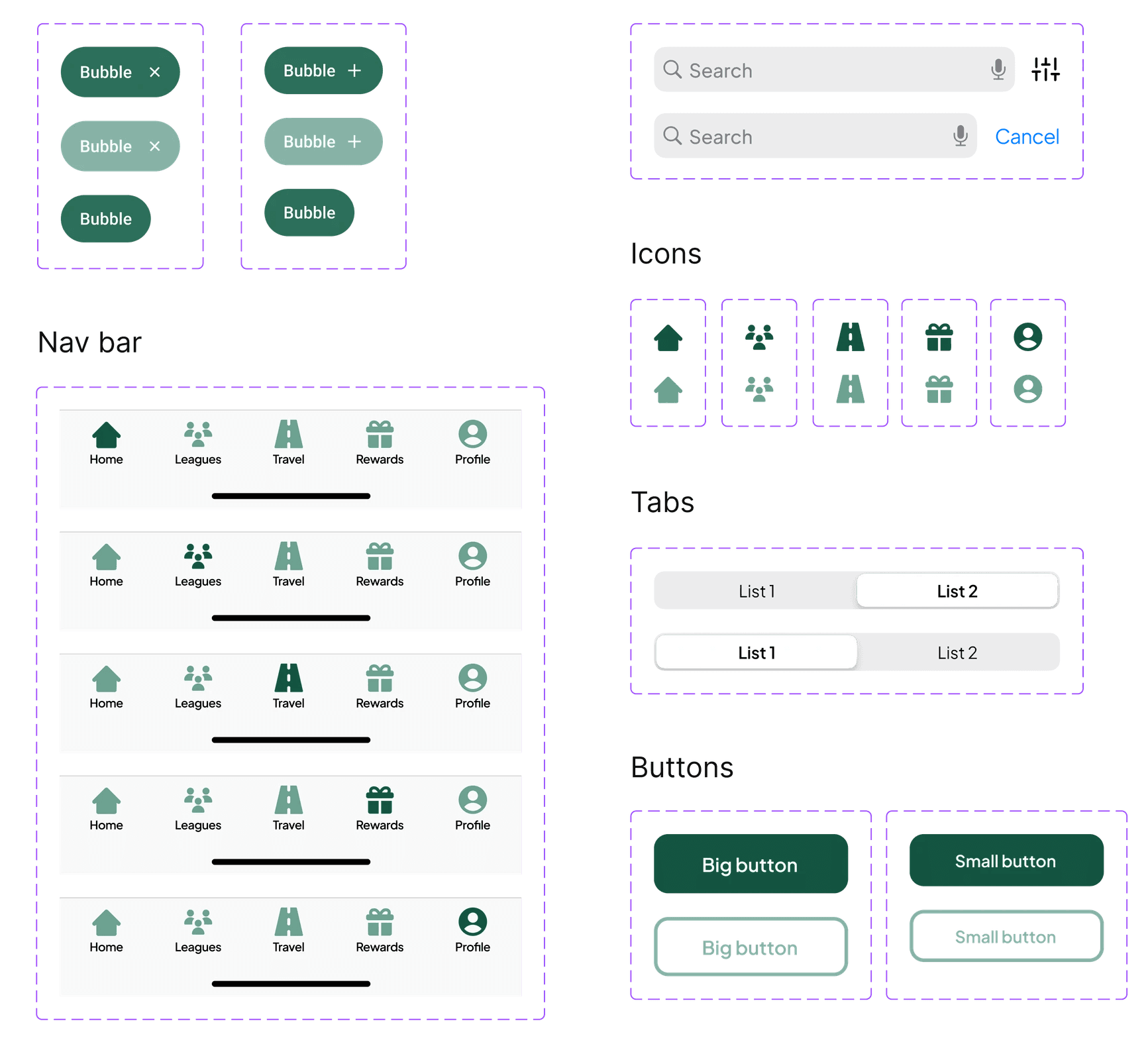
To create a cohesive and intuitive user experience, we developed a design system that guided the visual and interactive aspects of EcoWay. This helped maintain consistency across the app while speeding up the design and prototyping process.
Colors
Used earthy greens to represent sustainability.
Added neutral tones for balance and easy readability.
Typography
Chose modern, clean fonts for a simple, fresh look.
Created a clear text hierarchy to make content easy to follow.
Components
Designed reusable buttons, icons, and input fields for a consistent feel.
Kept the layout clean and minimal to help users focus on key features.
Colors

Typography
Components
Challenges & How We Tackled Them
24 hours. Zero sleep. Unlimited creativity. What could go wrong?
Well... a few things…
Finding Users for Research
Everyone was deep in their own hacks, so getting participants felt like chasing ghosts. 👻
Time Wasn’t on Our Side
With just one day to build everything, we had to be lightning fast. ⚡
Sleep? What’s That?
Pulling an all-nighter sounded fun... until our brains started glitching. 🤯
We didn’t give up—we hunted down our sponsors and managed to interview two sponsors & two fellow hackers.
No time for low-fidelity wireframes—we went straight from paper sketches to high-fidelity prototypes like absolute UX rebels. 😎
So we created a Power Nap Relay System™ (not patent pending).
One of us would nap while the rest kept working, then we’d switch.
🕵️♂️
⏳
💤

The Final Product
Quick & Simple Onboarding
💡 We added onboarding screens to guide users through setting up their travel preferences and reward choices.
✅ Why? → Users wanted control over their experience, so onboarding lets them choose their travel habits & reward preferences.
Travel Tracking & Impact Insights
💡 This flow allows users to log trips, track emissions, and see greener alternatives.
✅ Why? → Users wanted to understand their impact, so we show carbon footprint per trip and suggest greener alternatives.
League Feature: Compete with Friends
💡 A leaderboard where users can track their ranking, join leagues, and compete with friends.
✅ Why? → Users wanted a fun way to stay engaged, so we added leaderboards & challenges to encourage friendly competition.
Earn & Redeem EcoPoints
💡 Users earn points for choosing sustainable travel options and can redeem them for rewards and coupons.
✅ Why? → Users wanted rewards for their efforts, so we introduced EcoPoints that can be redeemed for discounts, eco-products, or charity donations.
Results
Yay! We Did It!
EcoWay Won Best Sustainable Hack!

What I Learned
Creating EcoWay in just 24 hours taught me the power of:
Simplicity: We had limited time and resources, so we focused on the features that would have the most impact.
Gamification: People are more likely to engage with sustainability when it’s framed as fun and competitive.
Rapid Iteration: The ability to adapt quickly based on feedback is key to building a great product.
What's Next for EcoWay?
If we had more time, I’d dive deeper into:
More Testing: Gathering feedback from a broader audience and refining the features.
Real-Time Data: Integrating public transportation and traffic data to offer real-time eco-friendly travel options.